Unlicensed electrical work is one of the biggest hidden dangers inside Florida homes. From houses flipped without permits to DIY wiring to work done by unqualified handymen, unsafe electrical installations can lead to fires, shocks, surge damage, and failed inspections. The danger is even greater in Florida, where humidity, lightning, corrosion, and high electrical demand expose weak wiring far faster than in other states.
As licensed electricians serving Lakeland and Polk County, Look Electric Co. uncovers unlicensed electrical work almost every week – often after homeowners notice flickering lights, overheating outlets, or failed home inspections. Many of these issues could have been prevented if the signs of unlicensed work had been recognized earlier.
This guide explains exactly how to spot dangerous, unlicensed electrical work BEFORE it becomes a fire hazard – and what to do if you find it in your home.
1. Missing Permits – The First Red Flag
In Florida, most electrical work requires permits, including:
- Panel upgrades
- Circuit additions
- Lighting remodels
- EV charger installations
- Generator hookups
- Rewiring
- Outdoor electrical work
- Pool equipment wiring
- Bathroom or kitchen remodel wiring.
Unlicensed workers cannot legally pull permits.
If there are no permits for major electrical changes, assume the work is unsafe.
You can check permits through:
- City of Lakeland permit portal
- Polk County Building Department
- Previous homeowner disclosures
If work was done without permits, Look Electric Co. can perform a code compliance inspection and correct hazards.
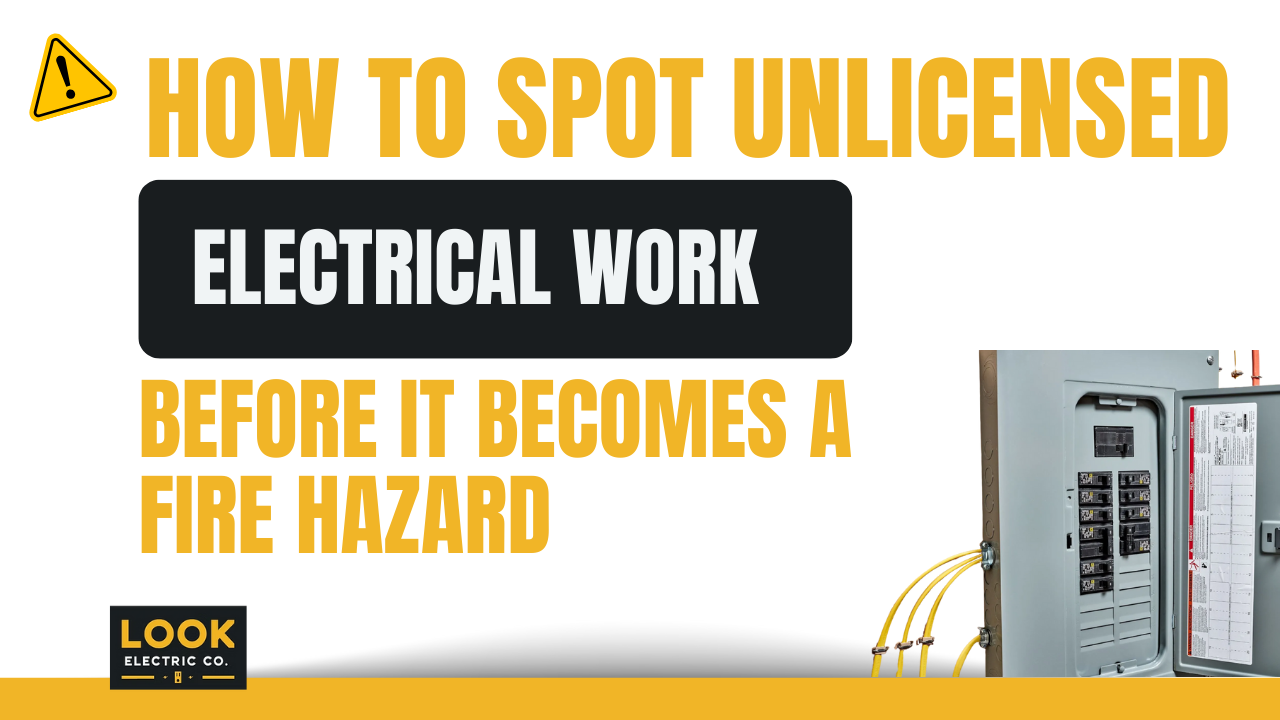
2. Loose, Overfilled, or Unlabeled Electrical Panels
An electrical panel tells a story. Unlicensed work usually leaves unmistakable warning signs:
Signs of unlicensed panel work:
- Double-tapped breakers
- Breakers that don’t match the panel brand
- Overfilled breaker spaces
- Loose, messy wiring
- Missing panel labels
- Burn marks or discoloration
- No main disconnect
- Rust from improper installation
- Missing dead-front screws
Panels are the heart of your electrical system – and incorrect panel work is a major fire hazard.
3. Scorch Marks, Warm Outlets, or Melting Switches
Unlicensed work nearly always results in dangerous connections, such as:
- Loose wire nuts
- Backstabbed outlets
- Overloaded circuits
- Incorrect wire gauge
- Faulty aluminum wiring connections
- Non-grounded devices
These issues create heat, and heat creates fires.
Warning signs include:
- Outlets warm to the touch
- Burnt plastic smell
- Yellow or brown discoloration
- Flickering lights
- Crackling noises
These symptoms are electrical emergencies – especially in Florida’s humidity, which accelerates corrosion and overheating.
4. Wiring Not Secured, Protected, or Installed to Code
The Florida Building Code and the NEC require wiring to be:
- Secured with proper staples
- Protected with nail plates
- Run through code-approved pathways.
- Installed inside electrical boxes
- Covered with approved enclosures
Unlicensed work often looks like:
- Wires loosely hanging in attics
- Splices wrapped in tape instead of inside a junction box
- Open-air wiring near insulation
- Romex exposed outdoors without conduit.
- Wiring runs too close to HVAC ductwork or plumbing.
If the wiring looks messy, it’s unsafe.
5. Mismatched or Incorrect Breakers
Panels like Eaton, Siemens, Square D, and GE require specific breaker types.
Unlicensed workers often:
- Install breakers from the wrong brand
- Use counterfeit breakers
- Install tandem breakers where they are unsafe.
- Use oversized breakers that don’t match the wire size.
Using the wrong breaker allows wires to overheat without tripping.
This is a major cause of electrical fires in older Florida homes.
6. Ceiling Fans Installed on Non-Rated Boxes
This is a classic sign of handyman work.
Warning signs include:
- Shaking or wobbling fans
- Screws slowly loosening
- Fan boxes are not anchored to the joist.s
- Cheap plastic boxes installed with drywall screws
Florida humidity weakens fasteners faster than most climates, making improper fan installation extremely dangerous.
See our article: 5 Common Ceiling Fan Installation Mistakes That Lead to Safety Hazards
7. GFCI and AFCI Protection Missing in Required Areas
Florida code requires GFCI in:
- Kitchens
- Bathrooms
- Garages
- Outdoors
- Pool areas
- Laundry rooms
And AFCI in nearly all living spaces.
Unlicensed installers often skip these protections because they “cost too much” – but these devices prevent:
- Shock hazards
- Arc faults
- Electrical fires
If a kitchen or bathroom outlet isn’t GFCI-protected, unlicensed work is likely.
8. No Grounding or Improper Ground Connections
Grounding is essential for:
- Lightning protection
- Surge protection
- Appliance safety
- Code compliance
Florida’s sandy soil makes proper grounding even more important.
Unlicensed work often results in:
- Ungrounded outlets
- Disconnected grounds
- Bootleg grounds (fake connections)
- Mixed metal connections that corrode
If your outlets have two prongs instead of three, have unlicensed work checked immediately.
9. Fixtures That Flicker, Hum, or Turn Off Randomly
Improper wiring creates unstable voltage.
Signs include:
- Dimming lights
- Buzzing dimmers
- LED fixtures are strobing or burning out
- Smart switches are losing power.
- Appliances resetting during storms
Florida’s lightning and humidity make these issues worse – and they usually indicate unlicensed wiring behind the walls.
10. Evidence of DIY Installations or “Homeowner Modifications.”
Some of the most dangerous unlicensed work we find includes:
- Extension cords are used as a permanent wiring
- Speaker wire used for lighting
- Electrical tape over live splices
- Wire nuts are not fully twisted.
- Undersized wire for high-load circuits
- Outdoor receptacles installed without weatherproof covers
If you see ANY of these, an inspection is urgently needed.
Why Unlicensed Electrical Work Is Especially Dangerous in Florida
Florida’s environment exposes weak wiring quickly:
✔ High heat
Attic temperatures reach 130–150°F.
✔ Humidity
Causes corrosion and loose connections.
✔ Lightning
Creates surges that overwhelm improper wiring.
✔ High power demand
Air conditioners strain circuits year-round.
✔ Older housing
Many Lakeland homes contain outdated wiring systems.
Unlicensed work simply cannot withstand Florida’s conditions safely.
What to Do If You Suspect Unlicensed Electrical Work
1️⃣ Do NOT try to fix it yourself
DIY corrections usually make the problem more dangerous.
2️⃣ Do NOT ignore flickering, burning smells, or tripping breakers
These are early fire warnings.
3️⃣ Call a licensed electrician for a full safety inspection
Look Electric Co. specializes in identifying and correcting:
- Unlicensed wiring
- Unsafe panels
- Improper grounding
- Overloaded circuits
- Code violations
We finish work that other contractors abandoned – safely and correctly.
Protect Your Florida Home From Unlicensed Electrical Work
Your family’s safety depends on proper, licensed electrical installations. If you suspect ANY unlicensed work in your home:
📞 Call Look Electric Co. at (863) 859-2515
📍 Serving Lakeland, Polk County & Central Florida
🛠 Licensed • Insured • Code-Compliant • Family-Owned