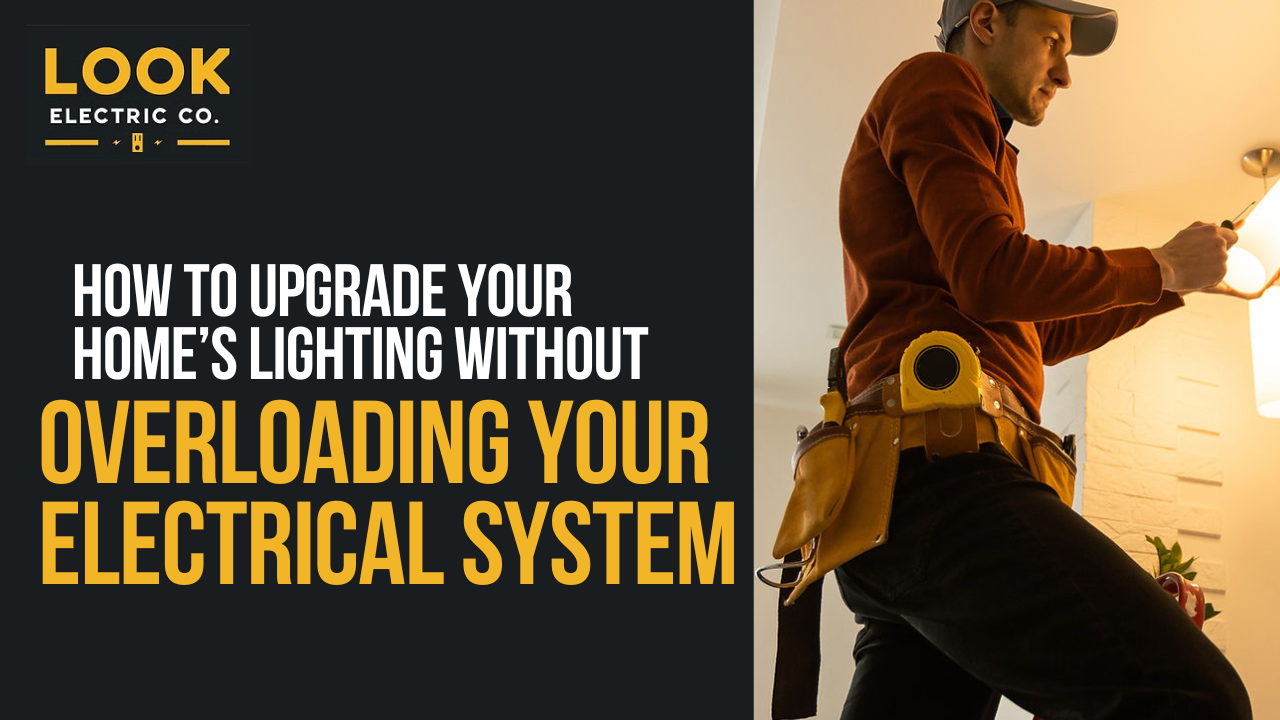
Lighting upgrades are one of the most popular home improvements in Florida. Whether you’re installing recessed lighting, adding LED fixtures, modernizing outdated rooms, or brightening your outdoor spaces, new lighting can transform your home’s appearance and energy efficiency.
But here’s the problem: most homeowners don’t realize that adding new lighting can overload their electrical system, especially in older Lakeland homes. Adding fixtures, dimmers, or smart lighting without evaluating circuit capacity can lead to:
- Breaker trips
- Overheating wires
- Flickering lights
- Fire hazards
- Failed inspections
- Insurance issues
This guide explains how to safely upgrade your home’s lighting without overloading your electrical system – and how to meet Florida electrical code requirements during the process.
1. Start With a Load Evaluation of Your Existing Circuits
Every lighting circuit has a maximum amount of electrical load it can safely handle. When you add lighting without checking capacity, you risk:
- Overheating wiring
- Tripping breakers
- Overloaded neutral conductors
- Damage to LED drivers or transformers
Most older Florida homes have:
✔ 15-amp lighting circuits
✔ Sensitive wiring that degrades in heat
✔ Shared loads with bathrooms, hallways, or exterior lights
A single 15-amp circuit often supports too many existing fixtures already. Before installing recessed lights or high-output LEDs, a licensed electrician should:
- Evaluate the total wattage on the circuit
- Identify shared loads
- Ensure proper breaker size.
- Confirm grounding & bonding.
- Test for voltage drop
If your home needs a circuit addition, Look Electric can install dedicated lighting circuits to prevent overload.
2. Choose Energy-Efficient LED Fixtures to Reduce Electrical Load
LED lighting is one of the best upgrades for Florida homes because it reduces wattage dramatically.
Typical fixture wattage comparisons:
| Fixture Type | Old Wattage | LED Equivalent |
| Ceiling light | 60W | 8–12W |
| Recessed light | 65W | 10W |
| Outdoor flood light | 150W | 20–30W |
| Under-cabinet lighting | 40W | 6W |
Switching to LED can reduce circuit load by 60–80%.
This means you can upgrade or add lighting safely without exceeding your circuit’s limits – but only if LEDs are installed correctly. Cheap online LED fixtures often cause:
- Flickering
- Overheating
- Short lifespan
- Transformer failures
Always choose UL-listed fixtures rated for Florida humidity.
3. Follow the Florida Electrical Code for Lighting Installations
Lighting upgrades must follow the Florida Building Code – Electrical, which is based on the National Electrical Code (NEC).
Key code requirements include:
✔ Proper Box Fill (NEC 314)
Light boxes must be large enough for all conductors.
✔ Rated Fixtures for Wet or Damp Locations
Outdoor lights and bathrooms require damp/wet-rated fixtures.
✔ GFCI Protection
Required for lighting near pools, spas, and some exterior spaces.
✔ AFCI Protection
Required for lighting circuits in most living areas.
✔ Accessible Junction Boxes
Boxes cannot be buried behind drywall.
✔ Correct Wire Gauge
14-gauge = 15 amps
12-gauge = 20 amps
✔ Surge Protection
Recommended – and sometimes required – for LED systems.
Even small violations can cause an installation to fail inspection.
If you want a code-compliant installation, work with licensed electricians who handle permits and know Florida’s local amendments.
4. Don’t Mix Old Wiring With New Lighting Without Inspection
Lakeland has many homes built in the:
- 1960s
- 1970s
- 1980s
This wiring often includes:
- Aluminum branch circuits
- Brittle insulation
- Cloth-wrapped wiring
- Non-grounded circuits
- Overloaded panels
Installing new fixtures on unsafe wiring increases fire risks dramatically.
If your home is older than 30 years, Look Electric recommends a lighting circuit safety inspection before making upgrades.
5. Add Dedicated Circuits for High-Demand Lighting Zones
Some lighting installations require their own circuit under Florida code, including:
- Large outdoor lighting zones
- Landscape lighting transformers
- Kitchen task lighting
- Garage shop lighting
- Smart home lighting hubs
- Theater or studio lighting
Running these on existing circuits may overload your system.
A dedicated lighting circuit ensures:
- Safer wiring
- Cleaner load distribution
- Less flickering
- Longer LED lifespan
- Better surge protection compatibility
6. Install Dimmers and Smart Switches Safely
Smart switches and dimmers are extremely popular, but many homeowners install:
- The wrong dimmer type
- Incompatible LED bulbs
- Dimmers on multi-switch circuits are used incorrectly.
- Non-UL-listed smart switches
- Wi-Fi switches in metal boxes (interference issues)
These mistakes lead to:
- Buzzing
- Flickering
- Excessive heat
- Overloaded electronics
- Fire hazards
Smart lighting must be matched to:
- Fixture wattage
- LED driver requirements
- Circuit type
- Neutral availability
- Florida humidity ratings
A licensed electrician ensures compatibility and code compliance.
7. Protect Your Lighting System From Florida’s Extreme Surges
LED fixtures and smart lighting components are extremely sensitive to voltage spikes.
Because Florida leads the U.S. in lightning strikes, Look Electric strongly recommends:
- Whole-home surge protection
- Panel-based surge arrestors
- Surge protection for landscape lighting transformers
- Dedicated surge devices for LED drivers
See our full guide: Why Every Florida Home Needs Whole-Home Surge Protection.
One surge can destroy hundreds of dollars in lighting instantly.
8. When to Upgrade Your Electrical Panel Before Adding Lighting
Lighting upgrades may require a panel upgrade if:
- You have a 100-amp panel
- Your panel has no open breaker spaces.
- You have Federal Pacific, Zinsco, or Challenger panels.
- Your circuits are already overloaded.
- You plan to add high-end lighting or smart systems.
A modern lighting system belongs in a modern electrical panel with:
- Proper labeling
- AFCI breakers
- Surge protection
- Clean wiring
- Safe grounding
If you’re renovating, ask about panel upgrades in Lakeland to avoid code issues.
9. When to Call a Licensed Electrician in Florida
Contact Look Electric if:
- Your lights flicker when appliances turn on
- Your dimmers buzz or spark
- You experience frequent breaker trips.
- You’re installing more than 4–6 recessed lights.
- You’re adding exterior lighting circuits.
- Your home has old copper or aluminum wiring.
- You’re installing smart lighting across multiple rooms.
Electrical lighting upgrades should never be left to guesswork. In Florida, safety and code compliance matter.
Upgrade Your Lighting Safely With Look Electric Co.
We help Lakeland homeowners brighten their homes without overloading circuits – and without compromising safety. Our licensed electricians install:
- Recessed lighting
- LED upgrades
- Outdoor and landscape lighting
- Smart switches & dimmers
- Dedicated circuits
- Panel upgrades
- Whole-home surge protection
Every installation meets Florida Building Code and NEC requirements.
📞 Call Look Electric Co. today at (863) 859-2515
📍 Serving Lakeland, Polk County & all of Central Florida
🛠 Licensed • Insured • Family-Owned • Free Estimates